
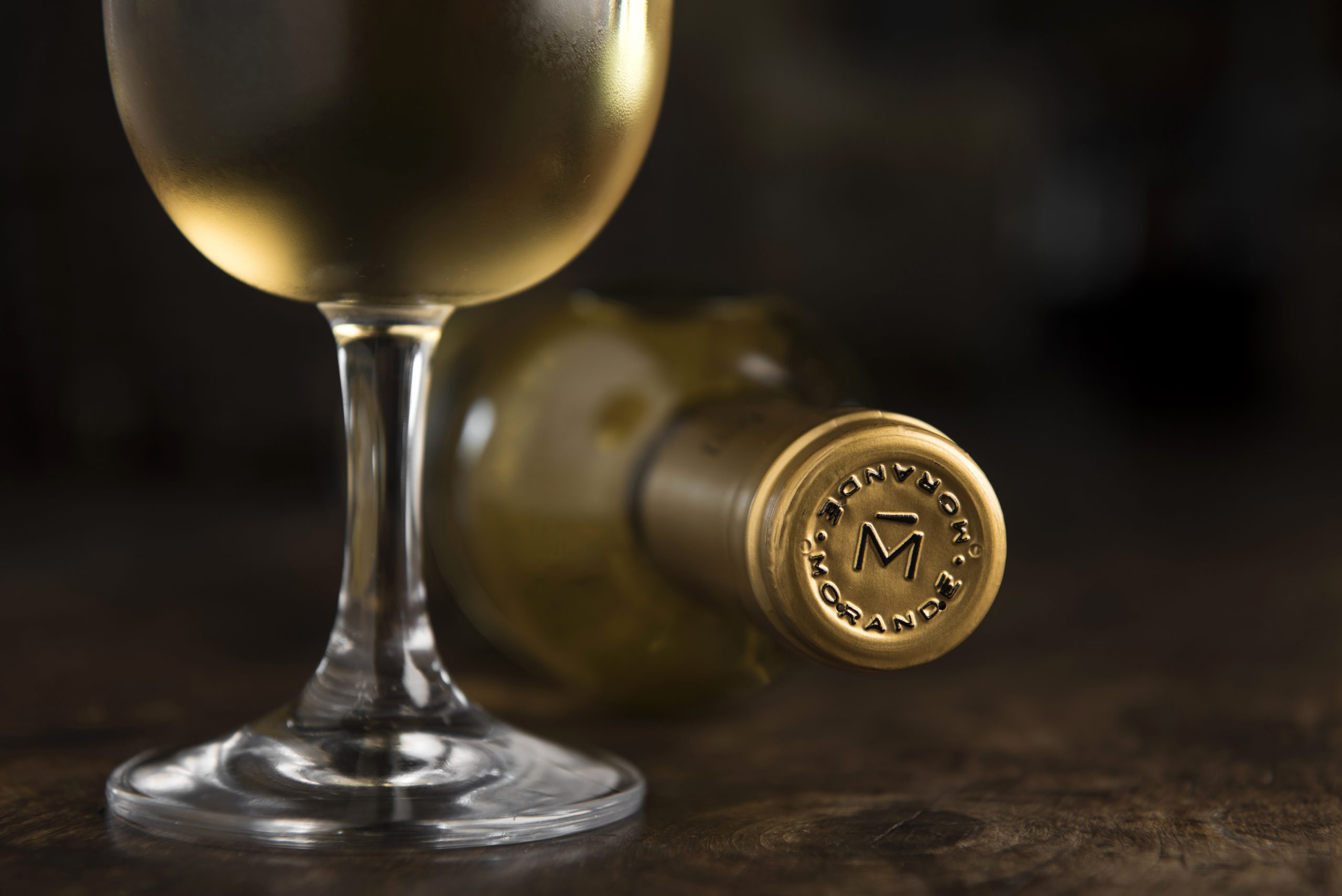
Few things are as fascinating as watching nature conspire to create truly unique wines. This is the case with Morandé Edición Limitada Golden Harvest and Morandé Late Harvest, our late harvest labels.
I am often asked about the difference between them, since they share several similarities: both are made from sauvignon blanc and come from specific vineyards in the Casablanca Valley. They are also shaped by this natural conspiracy, so to speak: the development of noble rot, caused by the fungus Botrytis cinerea.
This microorganism punctures the grape skins, triggering dehydration that concentrates sugars and acidity in a way that no human intervention could replicate.
Botrytization requires very specific conditions to occur. Our visionary founder, Pablo Morandé, quickly realized that Casablanca — with its cool, humid mornings and sunny afternoons — offered the ideal environment.
It wasn’t luck, but determination: dreaming of crafting the finest late harvest wine in Chile, Pablo introduced decisive changes in the vineyard, maintaining a more open and ventilated canopy and encouraging smaller clusters with looser berries.


The Golden Harvest
And so, in 2000, Morandé Edición Limitada Golden Harvest was born: a late harvest wine made from 100% botrytized grapes. Sourced from our El Principal vineyard, it is produced only in exceptional years. To date, only three vintages have met the required conditions: 2000, 2007, and 2013.
Its winemaking process is entirely artisanal. After several selective harvest passes, each cluster is hand-selected and the berries are separated one by one before pressing in vertical hydraulic presses. The resulting must — part liquid, part dense as honey — ferments in oak barrels for nearly a year. At this stage, botrytized grapes equivalent to the 6 puttonyos of the great Hungarian Tokaji wines are incorporated, giving the wine a depth and aging potential rarely seen in Chile.
After fermentation ends and the yeasts are spent, the wine remains for a second year in the same barrels before bottling. The 2013 vintage, which I had the honor of signing, received 96 points from critic Tim Atkin MW and was named “Sweet Wine of the Year” in the Chile Special Report 2021. A confirmation that Pablo Morandé’s dream had always been firmly rooted in reality.
The difference between Golden Harvest and Morandé Late Harvest is that the latter is made with around 40% of grapes affected by noble rot, without incorporating additional botrytized grapes during fermentation.


Its winemaking is also handled with great care. After selectively harvesting clusters affected by botrytis and others that are simply naturally raisined, a second selection takes place in the winery. Seeking delicacy and vibrancy, we slowly ferment the must in used French oak barrels and keep the wine in barrel for five months, preserving freshness and fruit expression while keeping the oak in the background.
The result is fresh, complex, and approachable, standing out as a generous gateway for those who want to understand what Casablanca can achieve with late-harvested grapes. Between the two labels there is a difference in intensity and rarity, but they share the same origin: a unique place, a precious fungus, and years of learning how to reveal the very best that nature can offer.
Ricardo Baettig
Winemaking Director | Viña Morandé