
Valleys and Wineries
Origin defines character
We believe that wine is born from the land. That every valley, every soil, and every climate leaves its mark on the grapes and on the story that each bottle will tell.
Our obsession with terroir has led us to explore different wine-growing regions in Chile, from the young coastal vineyards of the Casablanca Valley to the old vines of the dry-farmed vineyards in Maule and Itata.
To craft our wines with precision, we have established wineries with specific purposes: Bodega Aventura, our laboratory for exploration and small-batch winemaking, and Pelequén Winery, our hub for operations and sustainability.

Bodega Aventura
Pelequén Winery

Casablanca Valley
Maipo Valley
Maule Valley
Malleco Valley
Itata Valley
Bodega Aventura
Bodega Aventura embodies Morandé's pioneering spirit, combining cutting-edge technology, respect for the land, and authenticity. Designed as an underground, gravity-fed winery, it minimizes its impact and allows us to create experimental wines, reviving ancestral methods and driving innovation in our portfolio.


Pelequén Winery
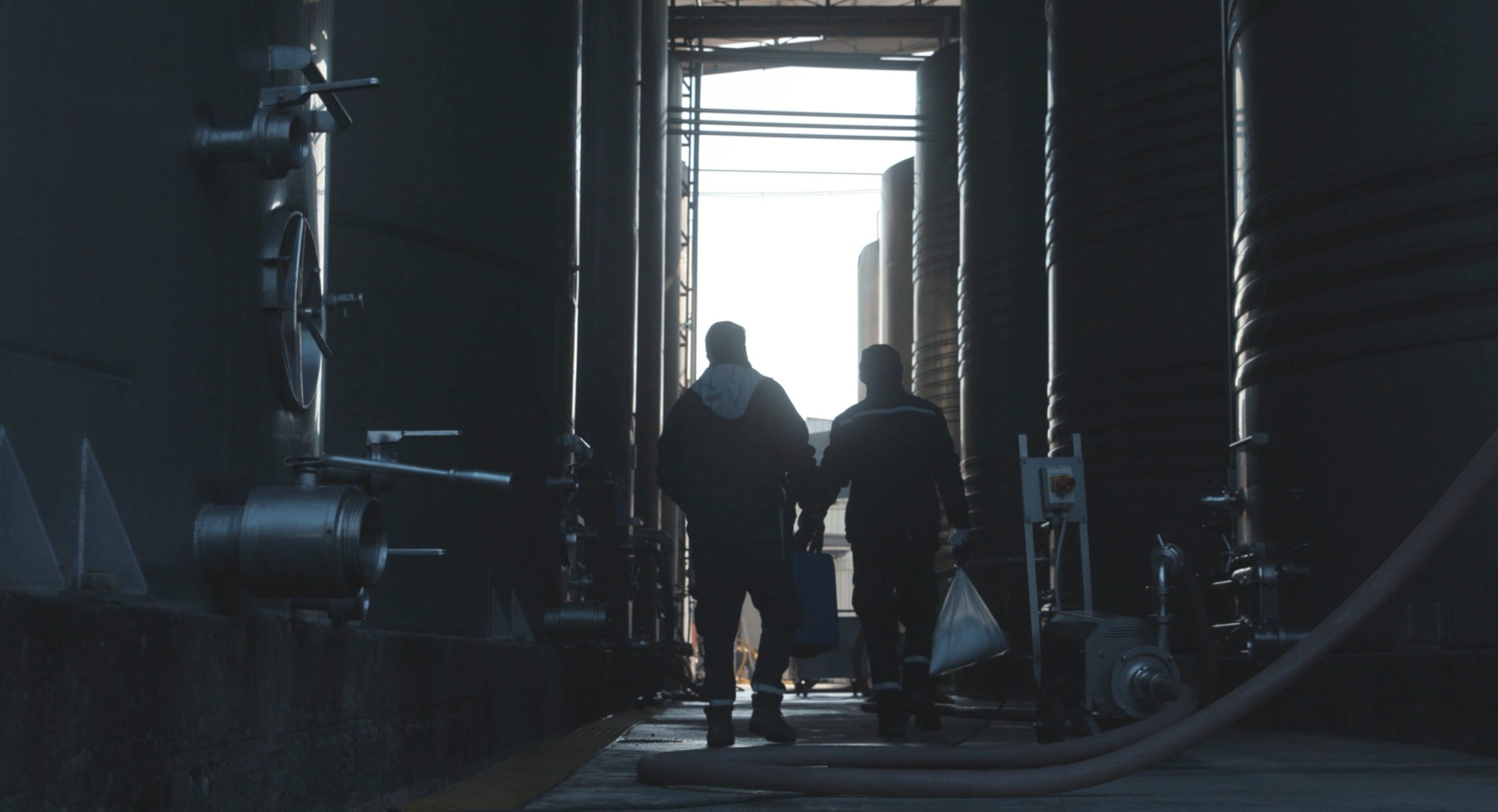
Located in the Rapel Valley, just 75 miles south of Santiago, our Pelequén Winery is the operational heart of Viña Morandé. With modern, well-equipped infrastructure, this winery handles the reception, vinification, storage, and bottling of a significant portion of our portfolio.



Casablanca Valley
Coastal freshness and vibrant expression
Since its beginnings, Viña Morandé has been marked by the vision and pioneering spirit of its founder, Pablo Morandé.
Today, this coastal valley is internationally recognized for the quality of its wines, especially its cold-climate varieties.
Its main geographical feature is the influence of the Pacific Ocean: sea breezes and morning fog act as natural temperature regulators, extending ripening cycles and concentrating aromas, freshness, and acidity.
The varieties that express themselves best here are Malbec, Syrah and Cabernet Franc.
Belén Vineyard
Casablanca Valley
Located in the Lo Ovalle sector, Viñedo Belén represents our vision of modern, precision viticulture in Casablanca. Planted in two stages (2004 and 2005), this field has 130 hectares cultivated under a high-density concept: more than 10,100 plants per hectare, with only 0.66 m between plants, allowing for greater competition, deep roots, and low but high-quality yields.
Climate
Cold winters with average highs of 15°C and lows of 2°C. In summer, the temperature range reaches 21°C, with highs of up to 30°C. Frosts are frequent in low-lying areas.
Soil
Medium to coarse texture. Loamy-clay soils predominate on slopes. The field varies in altitude from 274 m to 385 m, allowing for harvests at different times to achieve unique profiles.
Training system
This cultivation model allows for deeper soil exploration, better use of moisture, and greater concentration in the grapes. This density, unique in Chile, is key to producing wines with great character and typicity.
Casablanca Valley
Casablanca Soil
Maipo Valley
Birthplace of Chilean Cabernet
The Maipo Valley is the historic heart of Chilean winemaking.
Its temperate climate, with dry, hot summers, and well-drained alluvial soils have established it as one of the finest regions for red wines, particularly Cabernet Sauvignon, where it achieves exceptional levels of typicity and elegance.
Free from frost and with rainfall concentrated between April and September, it offers optimal conditions for the healthy development of the vineyards and balanced ripening.
El Romeral Vineyard
Maipo Valley
Located in Maipo Alto, this vineyard covers 50 hectares planted between 2004 and 2005 using a high-density system (6,944 to 10,101 plants/ha). The area is characterized by cool afternoons thanks to the winds that blow in from the Maipo River basin, which improves the health of the vineyard and prolongs the ripening cycles.
Climate
Cold winters with average highs of 15°C and lows of 2°C. In summer, the temperature range reaches 21°C, with highs of up to 30°C. Frosts are frequent in low-lying areas.
SOIL
The field has two main types of soil: the Cerro de Romeral series, of colluvial/alluvial origin in the hillside areas, and the Maipo series, of alluvial origin, located on the plain near the river.
Both are medium to deep soils, with a loamy texture and stones that ensure good drainage and moderate fertility. The areas closest to the river have poor, stony soils, ideal for concentrated, long-lived wines.
El Romeral Field
San Bernardo Vineyard
Maipo Valley
This vineyard is located in the commune of San Bernardo, at the foot of Cerro Chena. Planted in 1997 at high density (7,000 plants/ha), it uses vertical trellis training and double Guyot pruning, aiming for a natural yield of only 1 kg of grapes per plant, which guarantees remarkable concentration.
CLIMATE
Warm Mediterranean climate, with long, dry summers. During the production period (October to April), the average maximum temperature is 28°C and the minimum is 9°C. Relative humidity is around 50% and rainfall does not exceed 30 mm.
SOIL
Located on the third alluvial terrace of the Maipo River. Gravel and clay predominate, allowing for excellent root development. This combination of texture and composition is responsible for the structured and deep character of the wines produced in this area.
San Bernardo Field
Maule Valley
Deep roots, unmatched diversity
The largest and most diverse valley in the country.
Its sub-humid Mediterranean climate features rainy winters and warm summers with a wide daily temperature range, which promotes slow and balanced ripening. Its alluvial and volcanic soils, combined with its winemaking history, establish it as a true treasure of Chilean wine.
Here, the Secano Interior region—where century-old País and Carignan vineyards survive, trained using the traditional head-pruning methods inherited from Spanish colonization—coexists with the cooler foothills of the Andes, which are ideal for vibrant white wines thanks to the influence of the mountains.
Santa Elena Vineyard
Maule Valley
Located in Melozal, in the heart of the Cordillera de la Costa mountain range, this vineyard was planted in the 1950s with Carignan, País, and Semillon. It was later grafted with Mediterranean varieties such as Grenache and Syrah, which have adapted perfectly to the conditions of the Secano Maulino region.
CLIMATE
During the growing season (October to April), average temperatures reach 23°C, with highs between 32 and 34°C and lows between 12 and 14°C.
SOIL
Gently rolling terrain, very poor granitic-clay soils, with eastern exposure, which demand the utmost from the plant, yielding low but high-quality crops.
Training SYSTEM
Carignan is grown using the gobelet method, a traditional dry farming technique, while Grenache and Syrah are grown on vertical trellises, with natural training and open foliage.
La Constancia Vineyard
Maule Valley
Located in Pencahue, this vineyard was also planted in the 1950s with País and Malbec grapes. It is located on the eastern edge of the Cordillera de la Costa mountain range, which determines colluvial soils with a clay matrix and the presence of granite, perfect for producing wines with a silky texture and rich fruit expression.
CLIMATE
During the growing season, the average temperature is 19.2°C, with highs of 28°C and lows of 10.3°C.
Training SYSTEM
The País variety is grown on high trellises, maintaining the traditional legacy of the area, while Malbec is grown on vertical trellises, with open and natural foliage management.
Malleco Valley
Extreme terroir and great typicity
The search for new terroirs has been part of Viña Morandé's DNA since its foundation.
That restless, exploratory spirit took us to Traiguén, a small town in the Araucanía region, in the Malleco Valley.
Located 650 km from Santiago, this smaller, southern area extends to 40°, becoming a cradle for cold-climate, short-cycle varieties such as Chardonnay and Pinot Noir.
Araucanía Vineyard
Itata Valley
Located between the Andes and Nahuelbuta mountain ranges, the Araucanía vineyard in Traiguén reflects our search for new frontiers. The cold, rainy climate allows for slow, steady ripening of the grapes, as well as the development of grapes with sustained acidity and a fine aroma of great typicity.
CLIMATE
Temperate rainy climate, with dry, short summers and cold, rainy winters (10 wet months and 2 dry months). During the summer, rainfall decreases but does not disappear completely. The Nahuelbuta mountain range creates a rain shadow that moderates annual rainfall, which remains around 1,000 mm per year. Frosts are frequent in some areas. During the growing season, Traiguén accumulates between 900 and 1,000 degree-days and has an average temperature of 12.2 degrees Celsius.
SOIL
Mostly volcanic breccia soils, where successive eruptions have developed a deep profile, with a red clay matrix and friable rocks: a classic trumao. The combination produces soils of medium-low fertility and excellent drainage, thanks to the water retention of the clay and the presence of fractured andesitic rocks. There are some areas with medium-depth granitic soils and a good proportion of clay.
Training SYSTEM
Vertical trellis, planted in 2013, with a density of between 7,000 and 5,550 vines per hectare. In this area, the vines grow very slowly and the number of bunches per vine is significantly limited.
Itata Valley
Century-old grapevines and contemporary wines
A Chilean wine treasure, with a history dating back to the XVI century.
Located about 400 km south of Santiago, in the Ñuble region, it is one of the few places in Chile where vineyards over 100 years old can still be found.
In recent years, its uniqueness has attracted the attention of various winemakers, raising the region to a prominent position among Chilean valleys.
Ranquil Field
Itata Valley
Located in the La Capilla sector of Ránquil, in the coastal drylands of the Itata Valley, this estate covers 17 hectares of old vineyards planted with País, Cabernet Sauvignon, and Cinsault, some of which are over 130 years old. The vines are cultivated using traditional methods and are scattered among forests, hills, and pine trees.
CLIMATE
Mediterranean climate with winter rains and dry summers, influenced by cool coastal breezes that penetrate the valleys of the Cordillera de la Costa mountain range, which is lower in this area. Annual maximum temperatures average 20.6°C, while minimum temperatures average 7.6°C. Summers are hot, but shorter than in other regions further north.
SOIL
Graníticos, con abundante cuarzo en todo su perfil, ricos en arcillas rojas y de textura franco- arcillosa, lo que permite una excelente retención de humedad y un drenaje muy equilibrado.
Training SYSTEM
The Cabernet Sauvignon vineyards were planted over 130 years ago on ungrafted rootstock and trained as head-trained vines, with a density of 2,100 plants per hectare. Over the last century, the vines were adapted to trellis training and today they are maintained in an almost free-growing system, with only the wires necessary to support the shoots. Pruning is now carried out using the double Guyot method, adapted to the individual structure of each plant. The País and Cinsault vines, which are over 120 years old, are pruned at the head at a rate of 1,500 plants per hectare.